
The Latte Spectrum
Here’s something I take for granted: My morning latte is healthy. In my limited experience of obtaining detailed food records from people (and from eavesdropping at coffee shops), I’ve found that a lot of people’s morning lattes/coffees are NOT healthy. All those saturated fats from whole or 2% milk or full fat creamers…all those unnecessary added sugars from syrups and whipped cream…Since when did a cup of Joe become dessert for breakfast?
Your morning coffee is, no doubt, an integral start to your day for many reasons. For me, it’s that delightful caffeine boost. Like jumper cables to a dead car battery, my morning coffee breathes life into me and my protesting, groggy brain. Not to mention the taste…I’ve recently acquired a taste for good coffee, thanks to my uncle’s new endeavors into the coffee roasting business. I now know that drinking coffee should be an entirely pleasurable experience for the senses, though not at the expense of the waistline.
Coffee also boasts its fair share of nutritional benefits. According to Joan Salge Blake, MS, RD, LDN, a spokesperson for the Academy of Nutrition and Dietetics, coffee helps increase cognitive function and may protect against heart disease, diabetes, and some cancers. It’s also chock full of beneficial phytochemicals.
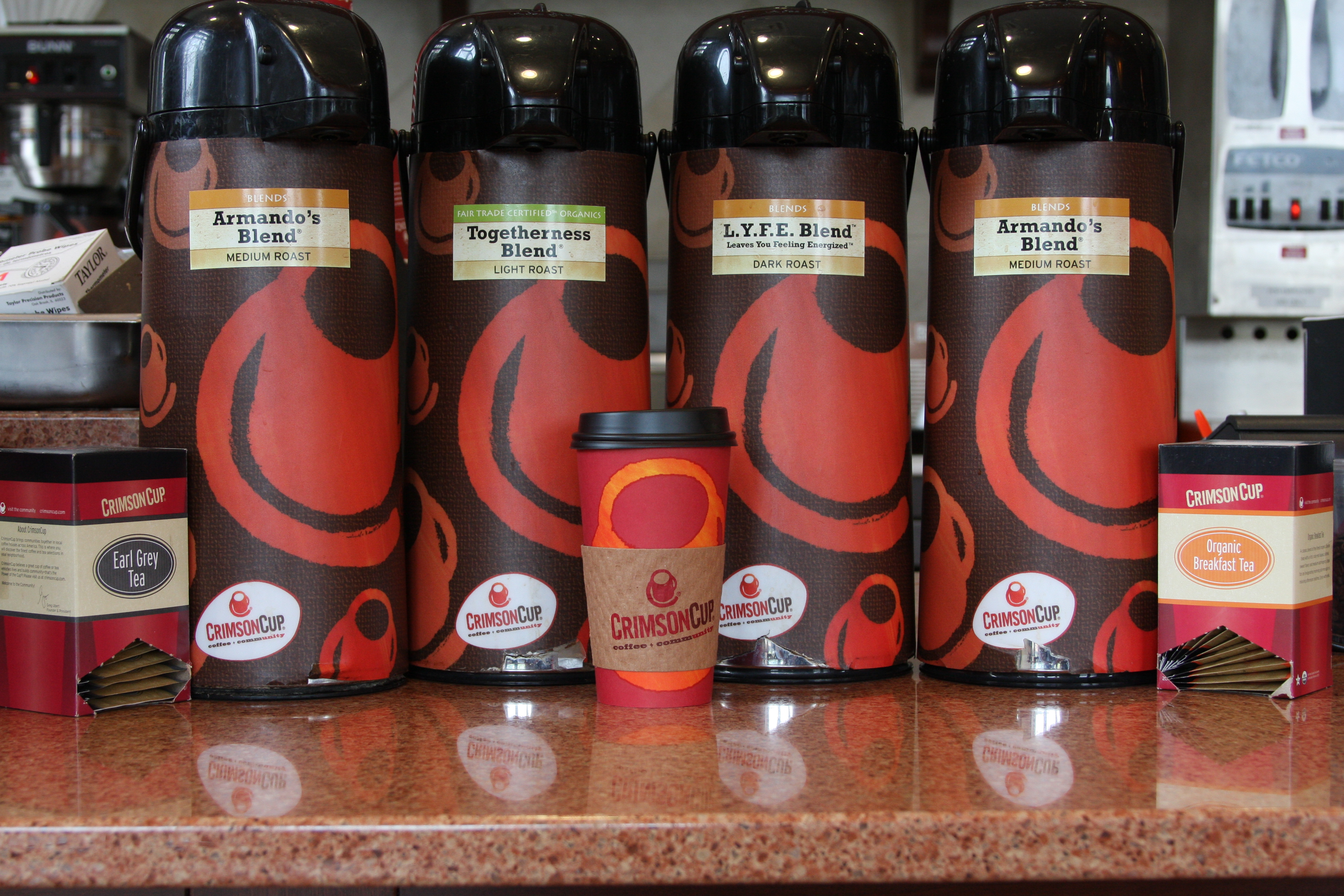
- Photo by Billy Brown
Last fall, I wrote a similar post about The Latte Spectrum on my personal blog and commented that I wished I could be cool like my dad and drink my coffee black. As it turns out, I was able to achieve that goal over the course of about four months, slowly weaning myself off of the added syrups from coffee shops and the coffee creamers from my fridge. (I do still add about a half cup of skim milk, but that’s so I meet my calcium and protein needs.)
It was pretty simple to beat my “addiction” to sugar in coffee, actually. Here’s the science behind how to “healthify” your coffee, based on Starbucks’ venti (large, 20 oz, whatever you call it) vanilla latte. (I chose venti because, quite frankly, anything smaller really isn’t enough espresso.)
A Venti Vanilla Latte with…
- …Whole milk is 370 calories.(WHOA…that’s almost 20% of my calories for the whole day, and I haven’t even eaten anything yet!)
- …2% milk is 320 calories
- …Skim milk is 250 calories
- …Skim milk and half of the usual amount of vanilla is 210 calories (2.5 pumps of vanilla syrup)
- …Skim milk and ¼ of the usual amount of vanilla is 190 calories (1-ish pump of vanilla syrup)
- …Skim milk and no syrup is 170 calories (This is called a Caffé Latte and all the calories come from the nonfat milk! Cow’s milk or soy milk are great for protein in the morning.)
I consider 1 through 6 to be the “Latte Spectrum.” I long hovered around #3 (skim milk, full syrup) then spent quite awhile at #4, but now happily sit at #6…It’s just caffeine and milk (protein and healthy deliciousness).
If you’re at number 2 right now, and work your way down to number 6, that’s 150 calories. If you figure you drink that 5 days a week, 50 weeks a year…that’s 37,500 calories and over ten pounds a year, just for treating your coffee like the Pick Me Up it was intended to be instead of dessert.
Crazy, right?
*Different coffee shops use different pumps for their syrups, making the “standard” number of pumps vary from place to place. The total amount of syrup remains the same, though. For example – the coffee shop I frequented at Ohio State used 8 pumps of vanilla instead of 5 because their pumps were smaller than Starbucks’ pumps. To avoid the confusion, I always just order my syrup in terms of “half the syrup,” etc instead of in terms of “2.5 pumps.”
**I personally find the “extras” that are put on lattes to be unnecessary. No whipped cream, chocolate “curls,” or chocolate or caramel drizzle. If you are getting a hot drink, it’ll all just melt in and you won’t even know you paid for it. If it’s cold, you’ll probably end up using your straw as a spoon to eat it, which is totally unnecessary and messy.
CAND Instagram
Recent Posts



Meet the Author

Bringing you the best nutrition information...
Our Academy Bloggers
CAND has several professional and student bloggers. They write about a range of topics for the public.